
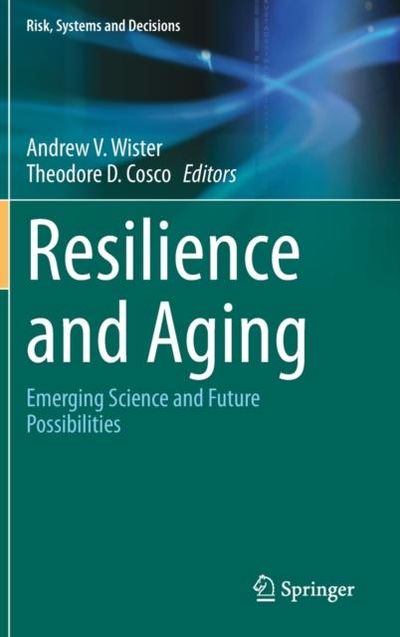
Resilience and Aging : Emerging Science and Future Possibilities Hardback - 2021
by Andrew V. Wister (Editor); Theodore D. Cosco (Editor)
- New
- Hardback
NZ$317.38
NZ$18.71
Delivery to USA
Standard delivery: 7 to 12 days
More delivery options
Standard delivery: 7 to 12 days
Ships from Ria Christie Collections (Greater London, United Kingdom)
Details
- Title Resilience and Aging : Emerging Science and Future Possibilities
- Author Andrew V. Wister (Editor); Theodore D. Cosco (Editor)
- Binding Hardback
- Condition New
- Pages 275
- Volumes 1
- Language ENG
- Publisher Springer
- Publication date 2021-01-05
- Illustrated Yes
- Features Illustrated
- Bookseller's Inventory # ria9783030570880_inp
- ISBN 9783030570880 / 3030570886
- Weight 1.28 lbs (0.58 kg)
- Dimensions 9.21 x 6.14 x 0.69 in (23.39 x 15.60 x 1.75 cm)
-
Themes
- Generational Orientation: Elderly/Aged
- Category Family / Parenting / Childbirth
- Quantity available 939
About Ria Christie Collections Greater London, United Kingdom
Biblio member since 2014
Hello We are professional online booksellers. We sell mostly new books and textbooks and we do our best to provide a competitive price. We are based in Greater London, UK. We pride ourselves by providing a good customer service throughout, shipping the items quickly and replying to customer queries promptly. Ria Christie Collections
30 day return guarantee, with full refund including original shipping costs for up to 30 days after delivery if an item arrives misdescribed or damaged.
Reader reviews for Resilience and Aging : Emerging Science and Future Possibilities
Write a review for this book
Important Terms and Guidelines
- Please focus on the book’s content and context. Also, add any personal comments as to how you enjoyed the book. Substantiate your likes and dislikes. You may make comparisons to other books.
- Reviews must be at least 140 characters in length.
- Please do not reveal critical plot elements.
- This is not a help line. Contact customer support if you need help.
Your review must not include:
- Obscenities, discriminatory language, or other insulting language not suitable for public domain
- Advertisements, “spam” content, or references to other products, offers or websites.
- Email addresses, URLs, phone numbers, physical addresses or other contact information.
- Overly critical comments about other reviews or reviewers
- Time-sensitive material (i.e. promotional tours, seminars, lectures, etc.)
- Availability, price, or alternative ordering/shipping information
From the publisher
From the rear cover
Older aged adults face many adversities over the later life course. This edited volume will address the ways in which seniors bounce back from different types and combinations of adversity - termed "resilience". While research has been accumulating that identifies inherent abilities and external resources needed to adapt and navigate stress-inducing experiences among aging and older adults, gaps remain in understanding the unique elements and processes of resilience. A series of chapters included in this book will address several overarching questions: why do some older individuals/families/communities adapt to adversity better than others; what are modifiable behavioral protective/risk factors related to resilience; and how can we foster resilience at the individual/community level and which approaches show the most promise?
The spectrum of aging-related challenges and responses addressed in this book include: mental health; physical/functional health problems; multimorbidity; socio-economic deprivation; social isolation and loneliness; cultural dimensions of loneliness; housing/homelessness problems; and environmental disasters. This book presents cutting-edge science at the conceptual, methodological, empirical and practice levels applied to emerging resilience sub-fields in gerontology. It will also present potential areas of future research, policy and practice linked to these areas.During a period of the most rapid population aging in the US, Canada and many other nations, coupled with heightened global socio-political change, extending our knowledge of resilience will help society to make important adjustments to maximize health and wellness of older individuals. Supporting and enhancing resilience through technological, social and/or community-level advances in geroscience will help those facing adversity to thrive by harnessing, stretching, and leveraging a wide array of potential resources. The promotion of healthier older populations has far-reaching consequences for health care and social/community support systems, both in terms of public health including pandemic response, and the development and implementation of innovations in treatment and practice guidelines.
The spectrum of aging-related challenges and responses addressed in this book include: mental health; physical/functional health problems; multimorbidity; socio-economic deprivation; social isolation and loneliness; cultural dimensions of loneliness; housing/homelessness problems; and environmental disasters. This book presents cutting-edge science at the conceptual, methodological, empirical and practice levels applied to emerging resilience sub-fields in gerontology. It will also present potential areas of future research, policy and practice linked to these areas.During a period of the most rapid population aging in the US, Canada and many other nations, coupled with heightened global socio-political change, extending our knowledge of resilience will help society to make important adjustments to maximize health and wellness of older individuals. Supporting and enhancing resilience through technological, social and/or community-level advances in geroscience will help those facing adversity to thrive by harnessing, stretching, and leveraging a wide array of potential resources. The promotion of healthier older populations has far-reaching consequences for health care and social/community support systems, both in terms of public health including pandemic response, and the development and implementation of innovations in treatment and practice guidelines.

